Some Q&A at the height of the Ebola outbreak in Sierra Leone

Interview of Maria Bertone held in November 2014 with the Directorate of Policy, Planning and Information of the Ministry of Health and Sanitation in Freetown

  1. Introduction

Noemi Schramm, Acting Unit Head & Health Economist, Health Financing Unit, DPPI, MoHS, GoSL

https://www.linkedin.com/profile/view?id=112471512&trk=nav_responsive_tab_profile

  1. Interview questions

From our offices in Europe, reading daily Ebola updates and news, we tend to imagine that nowadays a city like Freetown, the capital of one of the countries most affected by the outbreak, Sierra Leone, would look like as a barren, empty, post-apocalyptic town. Perhaps our perceptions shaped by the footage of the “lockdown” (http://vimeo.com/106806835) – when a three-day curfew was imposed on the entire country of Sierra Leone to allow volunteer to go house by house to sensitize the population and track down suspect Ebola cases (LINK). For those who know Freetown and West Africa in general, it was shocking to see empty roads and such eerie quietness.

How does the city look like today? What is the dominant atmosphere? Is everything close down or are shops and markets open and people fill the streets as usual and report regularly to work?

Life is going on as normal – with some small limitations. People are not shaking hands anymore, taxis and poda-podas (mini buses used for public transport) are less crowded and clubs are closed at night. However, people are still selling, buying, going to work, organizing their lifes, visiting family and friends and catching up with the latest football news. As most of the small cinemas showing football games are closed now, people with TVs in their house have become popular! Churches and Friday prayers are still allowed to happen and people spend significant times following religious services. As schools are closed, there are more children on the street either playing or selling things. So yes: life is bustling as normal during the day, but probably a bit quieter in the evenings. However, this obviously also depends on what community you live in. There have been isolated disturbing scenes in the East of Freetown, but the city never collapsed as much as Monrovia did. There were no public riots, no panicking public. Sierra leoneans are very resilient.

What are the main challenges for people’s daily life in Freetown?

Paying for food. Food prices have gone up and combined with less jobs or less secure jobs available, providing for the daily needs is even more of a challenge now. Furthermore, the situation in some rural parts of Sierra Leone is devastating and people are asking their family members in the city for increased help, which puts further pressure on people’s already limited financial resources.

This is a song circulating on the web (http://www.youtube.com/watch?v=0bo8s98t_g8). Have the information and community awareness efforts on Ebola improved people’s knowledge of the precautions? And if so, what were key determining factors (community health workers, social media, media, …)? Did the “lockdown” play an important role?

Everyone has heard of Ebola. However, the level of knowledge differs, as well as the level of belief in the messages. People still think that bushmeat is one of the major sources of transmission, even though there has only been one confirmed case of animal to human transmission. People are hearing the Ebola messages all day long, but sometimes it is just not possible to implement them – they might live in very crowded places, sharing latrines (if even available), eating food out of one pot or not having enough water to wash (hands) regularly.

The lockdown was called a success, but infection rates are still soaring. My impression is that a lot of people know some facts, but if it comes hard to hard, if your husband or your mother or your child is screaming in pain in your house and the free toll line 117 is not answering your calls for help for hours, everyone is a human. There are not enough treatment beds, so people are being sent home with very basic instructions on how to take care. Often, there is no other option than to touch the patient, with limited protection possible.

What do people in Freetown think of the international response? Too little, too late, or …? How do they see the international and domestic health workers with their PPE space suits, etc.? Is trust in the health system increasing or not, or is it too early to tell?

There is a general sense of disappointment. The British response is very slow, of the six treatment centers promised only one is opened and only working on a 10% capacity – three weeks after the opening. It is not understood what takes them so long to build treatment centers and what makes them turn away patients. There is a sense of a two-class treatment – with international workers getting evacuated quickly and being provided medical care (on board of the Argus, the military ship), while Sierra Leoneans are left to die in their houses. All Sierra Leonean doctors that got infected with Ebola died so far (one still fighting for his life at the time of writing). It is also not understood how the UK can invest so much money into fighting the disease here and at the same time cancel flights – the cancellation of the British Airways flight beginning of August started a whole chain of panic that probably cost the Sierra Leonean economy more than what is given every year in aid money.

The PPE space suits are scary and are carrying a message of death. People know that when somebody like this is carrying away your loved one, chances are high that you might not see that person again.

Trust in the health system has been weak pre-ebola and was still recovering from the civil war, when the outbreak hit. It will take time to rebuild and continue to strengthen the health sector. However – this time around the whole health sector is hit, including traditional healers. So instead of previously choosing traditional healers over public health care, people are now choosing no health care over the possibility of being infected with Ebola.

Some argue that the presence of urban slums and their mobile populations play a role in the spread of the Ebola epidemic (http://www.thelancet.com/journals/langlo/article/PIIS2214-109X(14)70339-0/fulltext). Which factors do you think allowed Ebola to spread so fast and widely in Sierra Leone?

Part of it is the dense population and uncontrolled movements, but also the lack of organization on community level. Poor areas were just left on their own with limited interventions from top-level. There is a need for way more community-based Ebola response centers, which can actually track each individuals.

Furthermore, there are lots of really bad decisions being done on the politics side of the ebola response. Unnecessary power fights (in government, between national and international partners, etc) do not help containing the outbreak.

We understand that new Ebola cases are now diminished in the provinces where the epidemic started (Kailahun, Kenema, ..), but there are increasing in other provinces (Port Loko, Bombali, …). Do you have an idea of the situation in the remote villages of those provinces? DO you have a sense that a ‘turning point’, the peak of the epidemic has been reached somewhere, and the worse is to come elsewhere? What about Freetown?

Some villages in the original epicenters are now starting to rebuild their communities. Fields have been abandoned, family structures changed, market situations are deteriorated. Some villages have come up with their own recovery strategy and are working towards rebuilding their communities. However, my impression is that the new epicenters are still very much in a panic mood. The turning point has not yet been reached. Especially in Freetown – it is difficult to see the light at the end of the tunnel.

What is happening at the Ministry of Health and Sanitation (MoHS)? Is everyone regularly reporting to work? Is staff screened for fever or other symptoms?

Staff is coming to work regularly and a lot are working hard to contain the disease. People are generally tired after having been fighting for more than half a year.
Security measures have tightened, there are chlorine buckets everywhere and thermometers that are used sporadically.

I read that a new National Ebola Response Center (NERC) has been established on the premises of the former Special Court for Sierra Leone (10-15 minutes drive from the MoHS in Youyi building), in order to ensure coordination in the efforts to fight Ebola. Have some staff or Departments of the MoHS been seconded or moved there? What is the role of the MoHS in the Ebola response? What is the role of the major international organizations (UNMEER, WHO, CDC/USAID, DfID, NGOs, Global Fund, GAVI, etc.)? How is the coordination/cooperation happening in practice?

Yes, some staff has been seconded to the NERC. Some staff has been seconded to the call center as well. MoHS was told by the president to focus on our usual work and continue with the previous projects as much as possible. This is good, as it is important to keep providing other services as well, however, it led to power fights as the doctors and MoHS feels undermined. A lot of money is channeled through the UN agencies now, after some initial problems with GoSL structures. UNFPA is responsible for contact tracing, Unicef is a logistics hub, World Bank is paying hazard pay to health workers, Red Cross and World Vision is responsible for the burial teams. The burial teams were previously managed by the Directorate of Reproductive and Child Health of MoHS, which obviously didn’t make sense at all. It was outsourced now through a contract. NGOs in cooperation with Ministry of Social Welfare is taking care of orphans and survivors. Coordination and cooperation is happening at NERC.

I noticed that the new MoHS website (http://health.gov.sl/) is very much focused on the Ebola response, and there is little on the other programs. The DPPI is usually quite busy with the management of the health information system (HMIS) on the one hand, and with the planning and managing of numerous health financing issues – you manage the country-wide Performance-Based Financing (PBF) system, you are preparing the National Health Accounts report, discussing the future of health financing in Sierra Leone, etc. What is the DPPI working on today?

We have been pushing hard to keep existing projects going, especially the PBF scheme. It is of utmost importance to 1) get money to clinics which they can use for general Ebola protective gear for example and 2) incentivize treatment of non-ebola diseases. However, it was difficult to persuade donors and partners that it makes sense to not stop all non-ebola activities. But up till now the PBF scheme is running, which is a success in itself. Furthermore, the NHA report is in its final stages and was just verified in a validation workshop with stakeholders, data validation was done on the HMIS, etc. The data system is important now, as it tells us about utilization of public health facilities. We have done some analysis and found no significant differences up until September, where utilization started dropping significantly. We are still completing October data. DPPI is very busy and also involved in the post-ebola strategy. Field missions have been completed and ideas are now being thrown around on how to rebuild the system.

There are many calls in blogs and discussions not to forget the importance of broader health system strengthening efforts in the fight of Ebola. Some estimate that the excess non-Ebola related deaths are substantial as people decide not to seek treatment in health facilities (LINK). What do you think are the main issues and challenges for the health system in this emergency? Are there health systems strengthening efforts that can be taken while addressing the Ebola emergency? What could be done / you are doing to support health system strengthening at the moment, and what should be done in the future?

Keep existing programs going – look at the PBF scheme. Inform policy makers on the health system now with all data available to allow for thorough planning of post-ebola strategies.

What do you think will be crucial to end this Ebola outbreak?

Behaviour change. I hope that the continued soaring of Ebola is a wake up call and people finally start being responsible for their families and neighbours and stopping the transmission change! Furthermore, I feel like the huge inflow of humanitarian emergency money has spoilt the health workers. More patriotism is needed and a higher sense of duty and responsibility for Sierra Leone. For the international community: stop looking in your own four walls and start thinking globally – this disease has to be defeated here. Panicking and stopping flights are not helpful. Stop the stigmatization of West Africa(ns) and send any help you can.


CRAZY-stories from the Lion Mountains

Mes chères, Hi all, Tschau zämä,

Alleine der 29. Januar war wohl einer der abwechslungsreichsten Tage
meines Lebens – abwechslungsreich genug, um ein ganzes Story-email zu
füllen. Sierra Leone bietet immer wieder Geschichten, die man
nirgendwo anders erleben würde. Hier eine kleine Auswahl davon
(entschuldigung für das etwas längere Email!).

So, sometimes life here in Salone is just crazy and you experience
things you would never at home. Here a small selection of the most
craziest moments of 2014 so far – still big enough for a exceptionally
long email, sorry-yo!

29 JANUARY
The 29th January started as an unusual Wednesday: one of the drivers
of our office came to pick me up and drive me with my motorbike to
work. He has insisted on picking me up as he apparently is an
“experienced bike rider”. Well, turns out he hasn’t been driving for
ten years, which is probably why we fell already after 100 meters.
Nothing serious happens, except from the bruises and scratches and we
somehow make it to the office. I never prayed that much on the short
drive to our office…
During the morning, I get asked to cheat on my arrival times, as
everyone who comes in late gets into problems. Government employees
are known to be notoriously late or just absent.
Anyway, I get a brief okada driving lesson during lunch time on the
parking space of my office. After ten minutes, the police that is
stationed at our office come over to me and arrest me, the bike
instructor, take my Swiss driving licence and my bike. Reason
(official): driving on parking space without official permit and
potentially harming somebody in the future. Reason (inofficial): I am
white and have money. I am too buffed to react, so I walk with them to
the police office and pray – and at the moment when I said “Amen”,
somebody screams “FIRE”! There is a fire in our wing of the office
building and everyone starts going crazy and runs off, which leaves me
with the opportunity to 1) pay off my bike instructor, who disappears
as fast as possible and 2) enables me to call one of my local friends
with influence.
The National Fire Force arrives after impressive 20 minutes, just to
realise that there is no water. Who cares, they did look impressive!
The fire was THE topic in the next day’s newspaper. My office is in a
circle in the picture:
https://www.dropbox.com/s/t36p2ozollkciqs/youyi_fire.jpg
After three hours, the fire succeeds and the police is finally coming
back to my case. My friend has arrived by then and discusses my case
with the chief inspector. The main accusation now is that I “helped
the main suspect (the instructor) to escape”. As soon as I agree to
make and sign a statement, they helplessly let me go and hand me back
my licence and my bike. Police here are evil, not your friend and
helper.
After an accident, a request to cheat, an arrest by the police and a
fire in one day, I was pretty tired in the evening, believe me.

29. JANUAR
Der 29. Januar startete schon als ungewöhnlichen Mittwoch, da
Mohammed, ein Fahrer von unserem Departement mich unbedingt abholen
wollte – mit meinem Motorrad. Entgegen seinen Beteuerungen, dass er
ein “erfahrener Töfffahrer” sei, hatten wir bereits nach 100 Metern
den ersten Unfall. Abgesehen von Beulen und Kratzern passierte
glücklicherweise nichts, aber ich habe noch nie so intensiv gebetet
auf dem kurzen Weg ins Büro, auf dem Rücksitz meines Töffs.
Im Büro werde ich dazu aufgefordert, mit meinen Einträgen ins
Mitarbeiterbuch zu schummeln, da niemand die korrekte Ankunftszeit
einträgt. Regierungsmitarbeiter sind dafür bekannt, immer zu spät zu
sein oder gar nicht erst zur Arbeit zu erscheinen. Es ist daher
auffällig, wenn alle um 7 Uhr zur Arbeit erscheinen und ich dann 8.30
Uhr eintrage.
Um die Mittagszeit erhalte ich eine kurze Fahrstunde auf dem Parking
Gelände unseres Büros. Nach zehn Minuten erscheint die Polizei und
verhaftet mich, meinen Fahrlehrer, konfisziert mein Motorrad und
meinen Schweizer Führerausweis. Grund (offiziell): Ich bin ohne
Erlaubnis auf offiziellem Regierungsgelände gefahren und könnte
jemanden verletzen in der Zukunft. Grund (inoffiziell): Ich bin weiss
und habe Geld.
Ich war zu überascht um zu handeln und folgte der Polizei daher zu
ihrem Büro. Während wir laufen, ruft jemand “FEUER”, und alle rennen
davon – im Ostflügel unseres Büros ist Feuer ausgebrochen! Ich nutze
diese Gelegenheit und 1) zahle meinem Fahrlehrer seinen Lohn, der sich
schnellstmöglich aus dem Staub macht und 2) rufe einen lokalen Freund
an um mir zu helfen.
Die Feuerwehr erscheint nach beeindruckenden 20 Minuten, ist aber
leider etwas nutzlos, da wir kein Wasser haben. Das Feuer war DAS
Thema am nächsten Tag in der Zeitung (ich habe mein Büro umkreist):
https://www.dropbox.com/s/t36p2ozollkciqs/youyi_fire.jpg
Nach drei Stunden ist das Feuer besiegt und die Polizei wendet sich
wieder meinem Fall zu. Mein Freund ist in der Zwischenzeit gekommen
und diskutiert meine Freilassung. Hauptanklagepunkt jetzt ist: ich
habe den Hauptverdächtigen – den Fahrlehrer – zur Flucht verholfen.
Nachdem ich schlussendlich zustimme, eine Aussage zu machen und zu
unterschreiben, lassen sie mich gehen – ohne Aussage, da dies nur
Büroarbeit bedeuten würde.
Nach einem Unfall, einem Bestechungsversuch, einer Verhaftung und
einem Feuer an einem Tag war ich dann doch etwas müde am Abend…

THIEF
Last week, we had a thief in our directorate – he broke into all
offices and stole laptops, mobiles and memory sticks. Our office was
in chaos and the lock broken:
https://www.dropbox.com/s/9b7wp4ii7zbe57x/thief.jpg
Investigations are still ongoing, but the police didn’t seem to make
too much of a competent impression. I had some hilarious conversations
with the Detective and gave a statement, which was handwritten on a
piece of paper they found in my office.
In addition, we had a fire at the Central Medical Stores a week
earlier, which destroyed part of Sierra Leone’s drugs supply – a dark
day for the nation. The fire happened just at the time when the
management was supposed to change – funny, hmm. The stone-faced
serious answer of the detective on what happened was: “There is a
DEVIL in that building, a devil. We are looking to find somebody now
to get rid of the devil.” Sound police work, not so?

DIEB
Letzte Woche hatten wir nächtlichen Besuch in unserem Department: ein
Dieb brach in alle Büros ein und hinterlies Chaos. Foto:
https://www.dropbox.com/s/9b7wp4ii7zbe57x/thief.jpg
Die Polizei startete ihre Untersuchungen und nahm meine Aussage auf –
handschriftlich auf ein Stück Papier, das sie in meinem Büro fanden.
Eine Woche vorher hatten wir einen verherrenden Brand im Lager des
Gesundheitsministeriums, wo alle Medikamente gelagert werden. Das
Feuer zerstörte einen grossen Teil davon (und fand genau dann statt,
als das Management wechseln sollte… Zufall?!) und sorgte für
öffentliche Empörung. Die ernsthafte Antwort des Inspektors auf die
Frage nach dem Stand der Untersuchung war: “Es ist offensichtlich: ein
TEUFEL ist in diesem Gebäude, ein Teufel. Wir suchen nun jemanden, der
den Teufel austreiben kann.” Solide Polizeiarbeit, oder?

WEAK WOMAN IN THE SLUMS
Friends of mine are working for an organisation in the poorest area of
Freetown, a slum called Kroo Bay (picture of the bay from a boat trip:
https://www.dropbox.com/s/9n153n14wx8mp7x/kroobay.JPG ). They invited
me to attend one of their programs on a Saturday and offered to give
me a tour through the slum. I had slight health issues in the morning,
but decided to visit them nevertheless. The program with more than 200
kids started in the afternoon and I was supposed to stand in the back
and make sure they all behave. Anyway, after ten minutes in the
afternoon heat, I fainted – and was completely embarrassed when I then
obviously was a given a special treatment. Weak white woman in the
slum!

SCHWACHE WEISSE FRAU IN DEN SLUMS
Freunde von mir arbeiten im ärmsten Teil von Freetown, einem Slum
namens Kroo Bay (hier ein Bild von der Meeresbucht aus:
https://www.dropbox.com/s/9n153n14wx8mp7x/kroobay.JPG). Sie haben mich
eingeladen, an einem ihrem Samstagnachmittagprogramme teilzunehmen und
nachher einen Spaziergang durch den Slum zu machen. Ich hatte kleinere
gesundheitliche Probleme an diesem Morgen, aber entschied mich,
trotzdem hinzugehen. Das Programm mit über 200 Kindern startete und
ich sollte zuhinterst darauf schauen, dass die Kinder sich benehmen.
Nun, nach zehn Minuten in der Nachmittagshitze fiel ich in Ohnmacht
und sorgte damit für eine grössere Ablenkung. Daraufhin erhielt ich
eine Spezialbehandlung, was mir sehr peinlich war – die schwache
weisse Frau in den Slums!

DANKE vielmals für alle eure Emails, Nachrichten und Ermutigungen, die
ich immer wieder erhalte. Jedes Wort ist ein Goldschatz für mich –
danke!

And I just want to say THANK you all for your replies and messages and
encouragement that keep coming in! Each single word is a source of
pure joy for me – keep them coming 🙂

Take care, passed uf eu uf,
Noemi

PS: Motorbike update: Since I now finally have my driving licence
(which is another story)
https://www.dropbox.com/s/vjxdj6l9r5w887r/licence.jpg, I am riding
around my okada. I had the most stunning ride from the beach back to
Freetown this weekend. The sun setting over Sierra Leone, the trees in
the rainforest lush with green, full of life and bathed in the golden
light of the last sun rays, the road dusty with red soil and yearning
for the coldness of the night – and then there is Noemi driving her
red bike through it all and enjoying the bumpy road full speed while
taking in the gorgeous nature of West Africa.
Some bike pictures (I recently have been collecting loads of them…):
https://www.dropbox.com/s/zplnhqg1evqih5t/bike1.jpg
https://www.dropbox.com/s/tpiqe4cwanasij2/bikeforest.jpg
https://www.dropbox.com/s/bl2z5xxlp17ac9z/bikebeach.JPG

PS: Töff Neuigkeiten: Ich habe nun schlussendlich einen Führerausweis
für Motorräder (eine weitere Geschichte…
https://www.dropbox.com/s/vjxdj6l9r5w887r/licence.jpg) und versuche
nun, herumzufahren. Ich hatte dieses Wochenende eine absolut
fantastische Fahrt zurück nach Freetown vom Strand. Die Sonne war
langsam am untergehen, die Bäume im Regenwald strotzten grün und
voller Leben und wurden im goldenen Licht der letzten Sonnenstrahlen
gebadet, die Strasse war staubig mit roter trockener Erde – und dann
war da Noemi, die sich einen Weg durch die rudimentäre Strasse sucht
mit ihrem roten Töff und die unglaubliche Natur von Westafrika
geniesst. Einige Bilder mit meinem Töff (momentan mein liebstes
Sujet):
https://www.dropbox.com/s/zplnhqg1evqih5t/bike1.jpg
https://www.dropbox.com/s/tpiqe4cwanasij2/bikeforest.jpg
https://www.dropbox.com/s/bl2z5xxlp17ac9z/bikebeach.JPG

Man-stories from the Lion Mountains

Dear friends,
Liebe Freunde,

My lack of communication does not at all reflect the amount of stories
I collect. I soon have enough material for a whole book and selection
of what to send to you is getting harder. This time I’ll tell you
something about an issue I am very passionate about: female
empowerment. Most of my longterm friends have probably been involved
in one or the other heated discussion with me on the necessary of
gender equality and a further push for it. I was often told that we
don’t need this anymore and that I am probably not suffering at all.
It is crazy though, that my main problem here in Salone now is sexism.
My work colleagues (mostly middle-aged, big-bellied doctors and people
used to power) see me as either a secretary or a potential dating
partner. But let the stories speak for itself.

Ich habe schon bald genügend Geschichten gesammelt, um ein ganzes Buch
zu füllen. Die Auswahl fällt jedes Mal schwer, aber schlussendlich
schreibe ich einfach, was mir gerade auf dem Herzen liegt. In meinem
ersten knappen halben Jahr hier in Sierra Leone wurde ich regelmässig
konfrontiert mit schreiender Ungerechtigkeit im Bereich
Gleichberechtigung. Besonders in meinem Arbeitsumfeld bin ich ständig
mit Sexismus konfrontiert und der tägliche Kampf, gehört und ernst
genommen zu werden ist ermüdend. Ich werde entweder als Sekretärin
oder potentielle Heiratskandidatin angeschaut, beides Rollen, die ich
nicht möchte.
Die meisten meiner Freunde werden schon in der einen oder anderen
intensiven Diskussion mit mir gewesen sein über Sinn und Unsinn von
Gleichberechtigung. Glaubt mir – Sierra Leone hat Gleichberechtigung
bitter nötig.

YOU ARE THE MAN
We are in a meeting, when I ask to turn off the AC as it is freezing
cold. One guy turns to Alex, my male co-worker and asks him, whether
this is okay. Alex is slightly perplexed and responds “Well, Noemi is
the boss here in that meeting”. The guy replies: “Yes, but you are the
man!”

DU BIST DER MANN
Wir sind in einer Sitzung, wenn ich darum bitte, die Klimaanlage
auszuschalten. Ein Sitzungsteilnehmer wendet sich zu Alex, meinem
(männlichen) Arbeitskollegen und fragt ihn, ob das in Ordnung ist. Er
ist leicht verwirrt ob der Frage und antwortet, dass Noemi der Boss
ist in dieser Sitzung. Der andere antwortet darauf: “Ja, aber du bist
der Mann hier!”

I LIKE YOU
Men here can be really self-confident and eloquent. One innocent
morning I was walking into our office building and get told by a guy:
“I like you. And you like me. You want to give me your number now.” I
slightly disagreed with him.

COOK
In order to improve my language knowledge, I was recommended to get a
Salonean boyfriend. The comment of a local female friend was: “You
want an African man? Can you cook?”. I asked why this is important,
whereas she mentioned that this is one of the two tasks of a woman
here. The other one is giving birth to as many children as possible.

KOCHEN
Ich spreche mit einer lokalen Freundin über afrikanische Männer,
worauf sie mich fragt: “Willst du einen afrikanischen Mann? Kannst du
kochen?”. Ihre Erklärung dazu ist, dass das einer der zwei Aufgaben
einer Frau hier ist. Die andere ist möglichst viele Kinder zu gebären.
Sie hat mir auch erklärt, dass europäische Männer zu langweilig sind,
weil zu vorhersehbar. Bei afrikanischen Männern weisst du nie, was
dich erwartet: schlägt er dich, liebt er dich, betrügt er dich,
verwöhnt er dich, verlässt er dich oder nimmt er sich eine zweite
Frau. Mehr Abwechslung, hat sie gemeint.

FAVOURS
Traffic in Freetown is terrific and everyday, thousands of schoolgirls
are trying to catch a ride to their school. They are waiting along the
roads for public transport, which normally means small minibuses
(“Poda-poda”) which are the cheapest (but also slowest and most
cramped) means of transport. They are often overfilled already and
hence, private cars often offer rides to those schoolgirls. No
monetary payment is expected, just a small favour in the end – a
blowjob is normally alright. Common knowledge and commonly handled
like this. You can also buy a young girl in the slums for an hour –
for 5000 Leones (1.10 Dollar / 60 pence). Good marks in university are
achieved by sleeping with the professors, which is why the most clever
female students pretend to be a bit less bright – outstanding
contributions makes one a target for blackmailing. Don’t stand out,
this is the survival strategy!

GEFALLEN
Jeden Morgen und Abend stehen tausende von Schulmädchen am
Strassenrand und versuchen, mit Hilfe von Minibussen (Poda-Poda) den
Schulweg zu meistern. Da diese Minibusse oft völlig überfüllt und
unendlich langsam sind, passiert es oft, dass Autofahrer den Mädchen
eine Mitfahrgelegenheit anbieten – für den Preis eines kleinen
sexuellen Gefallen am Ende der Fahrt. Allgemeinwissen hier in Freetown
und allgemein akzeptiert. Man kann auch ein junges Mädchen von den
Slums kaufen für eine Stunde – für 5000 Leones (1 Franken). Gute Noten
in der Uni erhält man, indem man mit dem Professor schläft. Darum
geben viele Studentinnen vor, nur durchschnittlich begabt zu sein –
äusserst schlaue Studentinnen werden gerne erpresst von ihren
Professoren. Nicht aufzufallen ist die Devise.

Salone reminds me everyday of the importance of female empowerment.
The best thing that can happen to a girl or young woman here is to get
pregnant from a sincere white man who then provides financially for
his child. This can be changed, not so?!

Gleichberechtigung ist essentiell für eine Gesellschaft – Sierra Leone
erinnert mich jeden Tag wieder daran. Das beste, was einer jungen Frau
hier passieren kann ist, schwanger zu werden von einem (älteren)
weissen Mann, der dann das Kind und die Mutter finanziell versorgt.
Das sollte nicht sein, oder?!

Herzlich, cheers,
noemi

In other news: The Minister of Defense now started joining our
Aerobics classes, apparently to check out women. New dating
perspectives! 😉

Des weiteren: Die Schweiz machte ihre erste offizielle Aufmachung in
unserem Bürogebäude. Nach der Masseneinwanderungsinitiative wurden die
Ergebnisse im TV in unserer Kantine diskutiert und – egal, welche
Neuigkeiten – ich freute mich über die Brücke zur Heimat!

Pictures/Photos:
https://www.facebook.com/media/set/?set=a.10152059267567958.1073741829.694622957&type=1&l=9e5a87cef0

Work-stories from the Lion Mountains

Dear all, meine Lieben,

Die meiste Zeit hier in Sierra Leone verbringe ich bei der Arbeit im
Gesundheitsministerium. Das Ministerium ist in einem Hochhaus, das von
Chinesen gebaut wurde in den 60er Jahren und den Namen “Youyi” trägt –
“Freundschaft” in Chinesisch. Es ist das weisse Hochhaus, das ihr
hier sieht (Ausblick vom Balkon einer Freundin):
https://www.dropbox.com/s/ft7tc1b79dn75le/Photo%2016-10-2013%2018%2033%2010.jpg

Time for some work-stories! I spend most of my time here working at
the Ministry of Health and Sanitation. The ministry is in a skyscraper
built by the Chinese in the 60s and was named “Youyi”, meaning
“friendship”. Looking from the balcony of a friend, the white
skyscraper in the middle of the picture is my office:
https://www.dropbox.com/s/ft7tc1b79dn75le/Photo%2016-10-2013%2018%2033%2010.jpg

650’000
Eines der Projekte, wofür ich verantwortlich bin, ist die Finanzierung
von Praxen
(Mehrzahl von Praxis?) anhand von der Anzahl und Qualität der
erbrachten Leistungen/Behandlungen. Das bedeutet, dass ich in meiner
zweiten Woche hier 650’000 US-Dollar im ganzen Land verteilte. Dieses
Geld wird direkt an die Praxen/Gesundheitszentren ausbezahlt, was die
Korruptionsmöglichkeiten soweit als möglich verringert.
Da wir zuviel Arbeit und zuwenig Angestellte haben, kann ich ziemlich
viel Verantwortung tragen – Ehre und Herausforderung zugleich!

COLLEAGUES
On my very first day at work, I met all the important people: the
security guy (who just sits there everyday in front of our office from
8am to 5pm without moving at all and looks like he is way past his
initial life expectancy), the newspaper guy (who brings the newspaper
everyday), the nut lady (who drops by our office and tries to sell
nuts everyday), the driver Mohammed (who is such a cheeky guy and
likes kissing my hand), the whatever-you-need-he-brings-it-and-cleaner
guy Ishmael (who just sits in front of our office and waits for us to
give him small tasks to do), the secretaries and my director (direct
boss). They are all lovely and very unique, if I may say so. Most of
my colleagues come into the office everyday, but whether they actually
work is another question. Is it not rare here that as soon as you have
a job, you just chill – because you’ve basically done the hard work
already (getting a job). This is Ibrahim, one of the guys that do work
sometimes – but not when he comes into our office!
https://www.dropbox.com/s/q87sxnl7irfwow3/2013-10-09%2016.51.44.jpg

RICOLA
Working in one of the poorest countries of the world holds its own
challenges. Everything I need for work, I basically have to bring myself – be
it a laptop, paper, pen, coffee, toilet paper, water, fixing broken
things or even internet. Fortunately, I got a desk and a broken (but
still “seatable”) chair. The desk is borrowed from the World Health
Organisation and if they want it back at one point, I will have to
work on the floor.
Working in one of the poorest countries also means that buildings have
different standards. We share our office with at least one rat, as I
found my Ricola, that I left in the drawer half eaten after a weekend.
Conclusion: rats do like Swiss sweets!

RICOLA
Ich arbeite im 7. ärmsten Land der Welt und das bedeutet, dass alles
etwas anders ist hier. Was auch immer ich brauche, muss von mir zur
Verfügung gestellt werden – ob Laptop, Papier, Schreibzeug, Kaffee,
WC-Papier, Trinkwasser, die Reparatur der Klimaanlage oder
Internetzugang. Glücklicherweise habe ich einen Pult und einen Stuhl
(der zwar kapput ist, aber man kann noch darauf sitzen). Der Pult ist
von der Weltgesundheitsorganisation ausgelehnt, die ihn jederzeit
zurückfordern kann – dann darf ich auf dem Boden weiterarbeiten.
Wir teilen unser Büro mit mindestens einer Ratte, die während des
letzten Wochenendes die Hälfte meines Ricola’s gegessen hat, das in
meiner Schublage lag. Ratten mögen also Schweizer Kräuterbonbons! ;)KRANKENKASSE
Der Präsident von Sierra Leone möchte 2015 eine nationale Krankenkasse
einführen. Die Gesundheitsfinanzierungsabteilung, die momentan aus mir
und Alex besteht, ist die leitende Institution des ganzen Prozesses.
Das bedeutet, dass ich letzte Woche eine Sitzung hatte mit 14
ranghohen, ausschliesslich männlichen und älteren Direktoren des
Gesundheitsministeriums. Wir diskutierten, welche Leistungen
inbegriffen sein sollten und wie wir das ganze finanzieren. Es ist
ziemlich herausfordernd, in solch einem Gremium als junge (weisse)
Frau gehört und ernst genommen zu werden. Aber die Arbeit an sich ist
ein Traumjob für eine junge Volkswirtin – wo sonst kann man bei der
Einführung einer nationalen Krankenkasse eine essentielle Rolle
spielen!

HEALTH INSURANCE
The president of the Republic of Sierra Leone has put the introduction
of a national health insurance in 2015 at the forefront of his agenda.
The Health Financing Unit, which currently embodies me and another
health economist, is meant to be the heart of the process. This
implies that I had a meeting last week with 14 toplevel, exclusively
male and old directors of the ministry of health and discussed the
benefits that should be included, the financing sources and so on –
based on a suggestion from our unit. The amount of influence one has
is thrilling for a young economist, even though it is a challenge to
be heard in such a committee as a young (white) woman. However, it is
an absolute dreamjob for any health economist! Where else can you
participate in the design of a national health insurance scheme – and
then one that is supposed to benefit mainly the poor?!

So far, so long. I really enjoy my job and am very grateful for that,
as my life outside of work is quite challenging and my levels of
frustration are sometimes overwhelmingly high. Right now I am
screening the housing market of Freetown and it is not very promising.
But yeah, it definitely keeps me busy – along with our current
security guards. There was money stolen out of our house and we are
playing Sherlock Holmes now and trying to find out who it was – the
night guard, the day guard or the cleaner. A real crime mystery.

Sonst ist mein Job hier vergleichbar mit unseren Verhältnissen. Ich
arbeite von 8 Uhr bis 18.00 Uhr, esse in der Kantine Zmittag (Sierra
Leone food) und arbeite vor allem mit Excel. Ein Email verschicken
dauert 15 Minuten (mit meinem Mobile Internetzugang) und daher wird
jeder Anhang zweimal auf Notwendigkeit überprüft. Ich mag meine Arbeit
und bin froh darüber – gerade weil mein Leben ausserhalb des
Gesundheitsministerium nicht ganz so einfach ist und mein
Frustrationsniveau manchmal echt hoch ist. Alles dauert hier etwas
länger und so wohl auch mein Einleben. Ich hoffe, es geht euch allen

gut und ihr geniesst den Komfort des Westens!

Hope you are all happy and enjoying the richness of the West (or East,
depending on where you are right now),
noemiPS: This is the Health Financing Unit in Action in their office
(meaning my colleague Alex and me, the only two white people in the
ministry and our helmets, which we use to get to work everyday):
https://www.dropbox.com/s/aiitr5ylfwq9l9r/WP_000811.jpg

PS: Hier ist die Gesundheitsfinanzierungsabteilung in voller Montur im
Büro (links Alex, rechts ich – die einzigen zwei weissen im
Ministerium. Zusammen mit unseren Töffhelmen, die wir für den
täglichen Arbeitsweg benutzen):
https://www.dropbox.com/s/aiitr5ylfwq9l9r/WP_000811.jpg

Pay a teacher, change the future | Lehrerpatenschaften

Teachers are influencing our future – child by child. So why not motivate them in doing a great job? You can pay the salary of a teacher. Sierra Leonean teachers receive about 900,000 Leones a month. A big number, that turns small once exchanged into US dollars: it is about 120 US Dollars (120 Swiss Francs, 90 Pounds) per month for secondary school teachers and less for primary school teachers. You can pay all of it or part-time. Motivate a teacher, change the life of many children and henceforth our future!

Find a list with teachers to sponsor here for secondary school and here you can donate easily:


Lehrer beeinflussen unsere Zukunft – ein Kind nach dem anderen. Lehrer verdienen es, für gute Arbeit belohnt zu werden: übernimm den Lohn eines Lehrers und werde Pate oder Patin! Sierra Leonische Lehrer verdienen 900‘000 Leones pro Monat, was eine grosse Nummer ist, aber ziemlich klein wird, sobald in Dollars gerechnet wird: es sind umgerechnet 120 US-Dollars (120 Schweizer Franken, 90 Pfund) für SekundarschullehrerInnen. Im Monat. Werde Götti oder Gotti eines Lehrers und bezahle ihm seinen Lohn, oder zumindest einen Teil davon.

Hier ist eine Liste mit SekundarschullehrerInnen, die noch Unterstützung brauchen und hier kannst Du einfach Teil davon werden:

Give | Spenden

We aim to be as transparent as possible and will keep bureaucracy at a minimum. We are a small organisation and are connected in passion and love – hence the low-level organisation. Any  items that you would like to donate (e.g. mobile phones, glasses, USB sticks, laptops, etc), get in touch with Noemi. Any financial support is always welcome, please donate via paypal or ask for the designated bank account for a standing order setup.


Wir wollen so transparent wie möglich sein und werden daher den administrativen Aufwand so klein wie moeglich halten.

Als kleine Organisation, die vor allem aus persönlichen Kontakten gewachsen ist, wird die Administration klein gehalten – wir bitten um Verständnis! Falls ihr gerne andere Dinge spenden möchtet – Handys, Brillengestelle, USB Speichersticks, Laptops oder ähnliches – meldet euch direkt bei Noemi! Spenden am besten ueber Paypal, einfach hier klicken (fuer Bankdaten fuer Dauerauftraege meldet euch bei mir):

DANKE vielmals, ihr lieben! Merci tuusig!

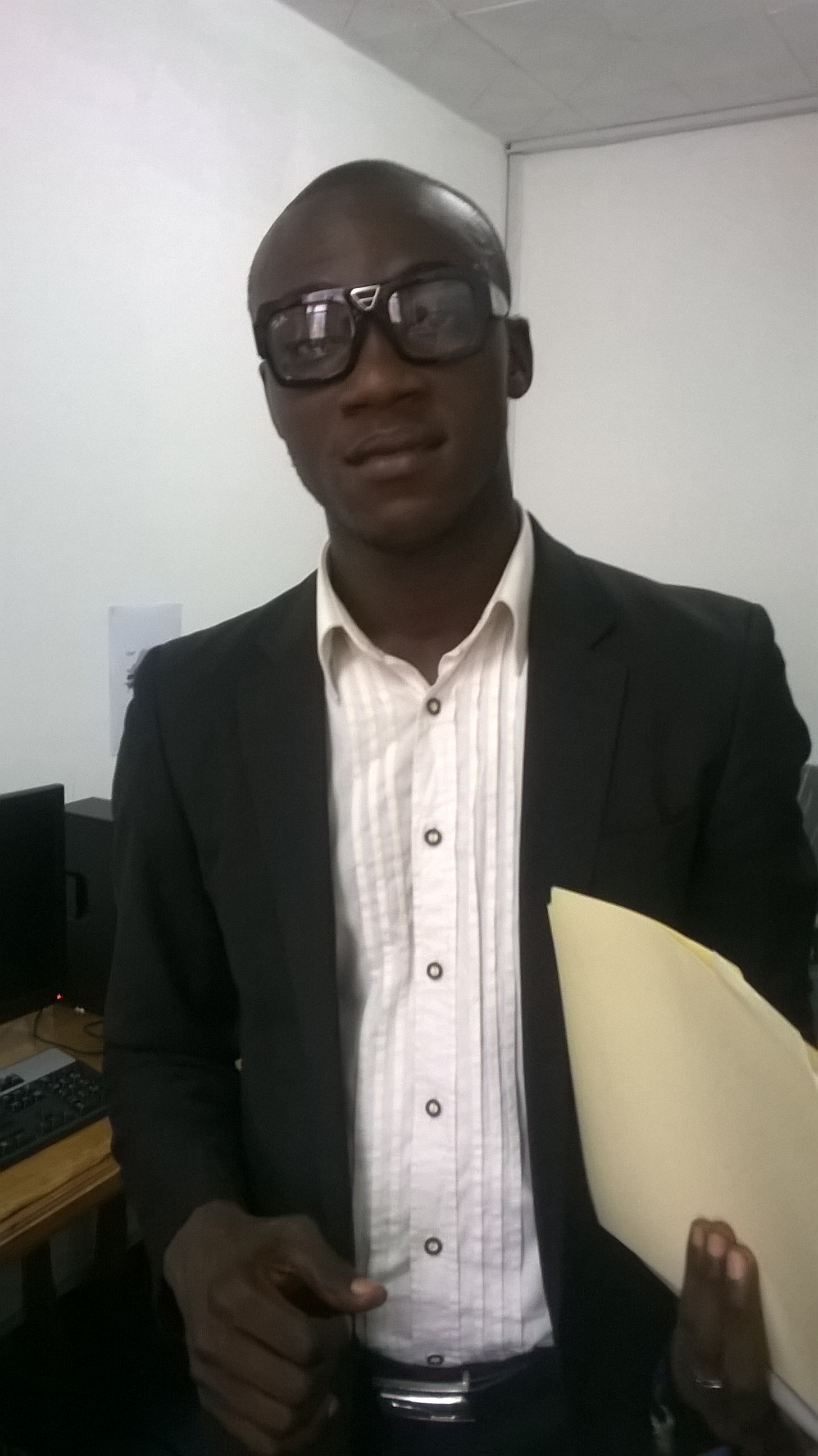
Ibrahim

Ibrahim is a young professional working as a Monitoring and Evaluation Officer in the Ministry of Health and Sanitation. He has a one year old son (and obviously future great football player) called Ibrahim Junior and a very smart wife named Hawa. He was quarantined in January 2015 because there were two Ebola cases in his compound. Food was supplied to him during the 21 days, but no provisions were made for Ibrahim Junior, who obviously has different needs as a baby. The Schramm Connection provided him with money for baby food and other needed supplies. They were released out of quarantine after 21 days and Ibrahim is happily playing football again for a local club called FC Plantain – and obviously hoping for Ibrahim Junior to join him soon on the football field.

Ibrahim doing his work as Monitoring & Evaluation Officer

Ibrahim doing his work as Monitoring & Evaluation Officer

Ibrahim and his baby son receiving donated money during their 21 days in quarantine

Ibrahim and his baby son receiving donated money during their 21 days in quarantine

Welcome to a world of passion and potential


We are all part of it: passionate and with high potential. The Schramm Connection wants to foster people with these features in Sierra Leone through different projects. This is our platform – welcome! We love to connect with you!

Wir sind alle Teil davon: leidenschaftlich und mit viel Potential. Die Schramm Connection will Leute mit diesen Eigenschaften in Sierra Leone fördern mittels verschiedenen Projekten. Wir freuen uns, mit dir zu connecten!